Shared Values Bring Us Together
We have had the honour of collaborating with many designers we deeply admire. Joanna Laajisto and Studio Kaksikko share what working with Nikari has given them – and what they have learned along the way.
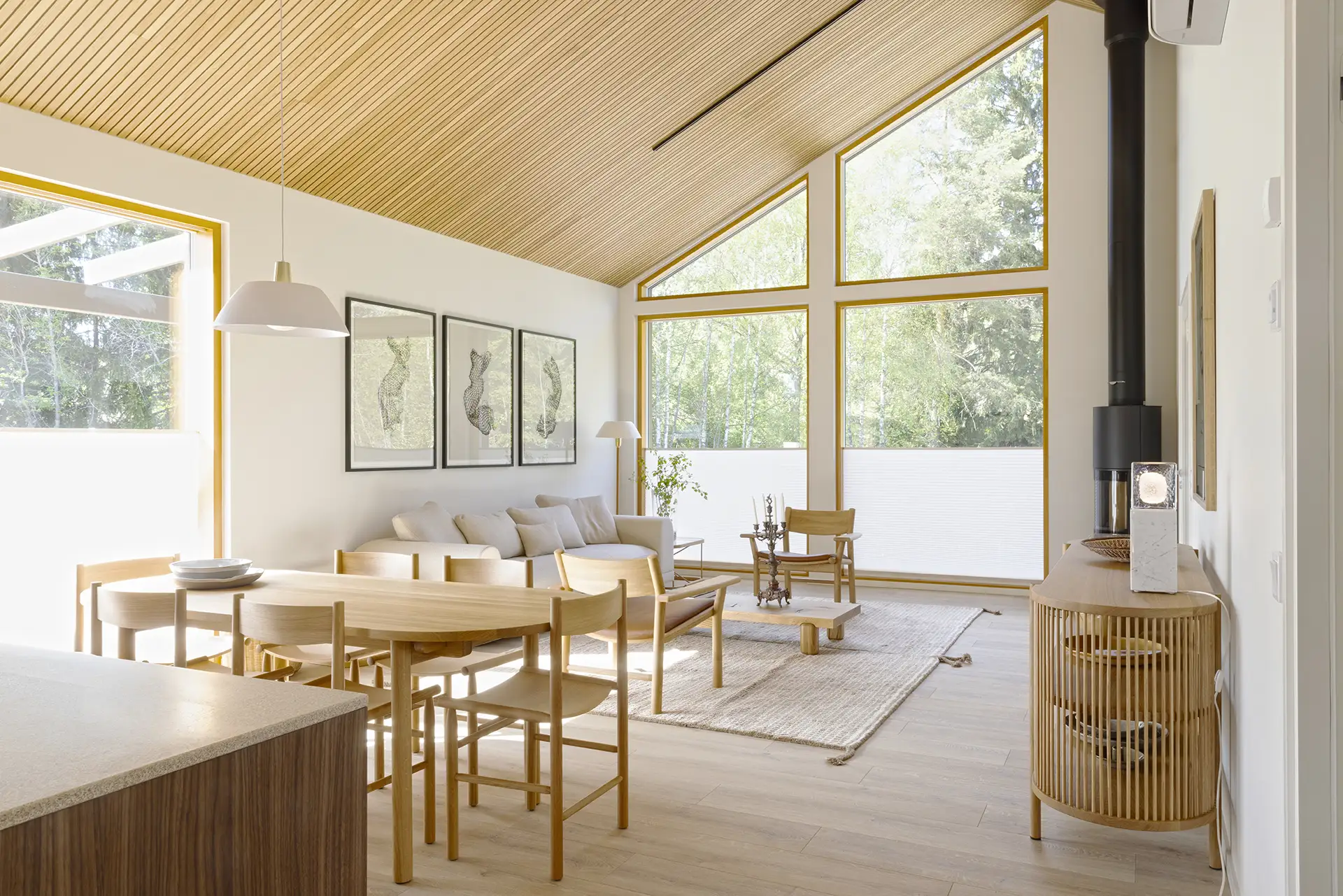
“It all started with conversations about the things we had in common,” says interior architect Joanna Laajisto. “We felt a kind of affinity.”
Over the years, she had crossed paths with Nikari CEO Johanna Vuorio at various fairs and events. Their conversations would invariably turn to what mattered to both of them: a deep respect for nature and, for example, accepting the inherent qualities of wood in all its forms. Many people want wooden furniture in their homes, but they want it to be made from flawless, top-grade wood.
“There is a certain expectation of perfection when it comes to natural materials,” Laajisto says.
Over the years, Laajisto and Vuorio also had the opportunity to work together on projects such as the Runo Hotel in Porvoo, whose interiors were designed by Laajisto, with many of the furnishings made by Nikari. At some point, Vuorio suggested that they could deepen their collaboration. The idea was left to mature.
Laajisto’s design processes often simmer for a long time – sometimes even for years – as she waits for the right moment and insight to emerge.
All those conversations with Vuorio had been quietly brewing in the back of Laajisto’s mind. Then, suddenly, she realised that she wanted to design a product that would “almost force you to confront” what a natural material is actually meant to look like. One afternoon, an image of a product flashed before her eyes. She quickly sketched it on a piece of paper – “I think it was the back of an envelope” – and sent it to Vuorio.
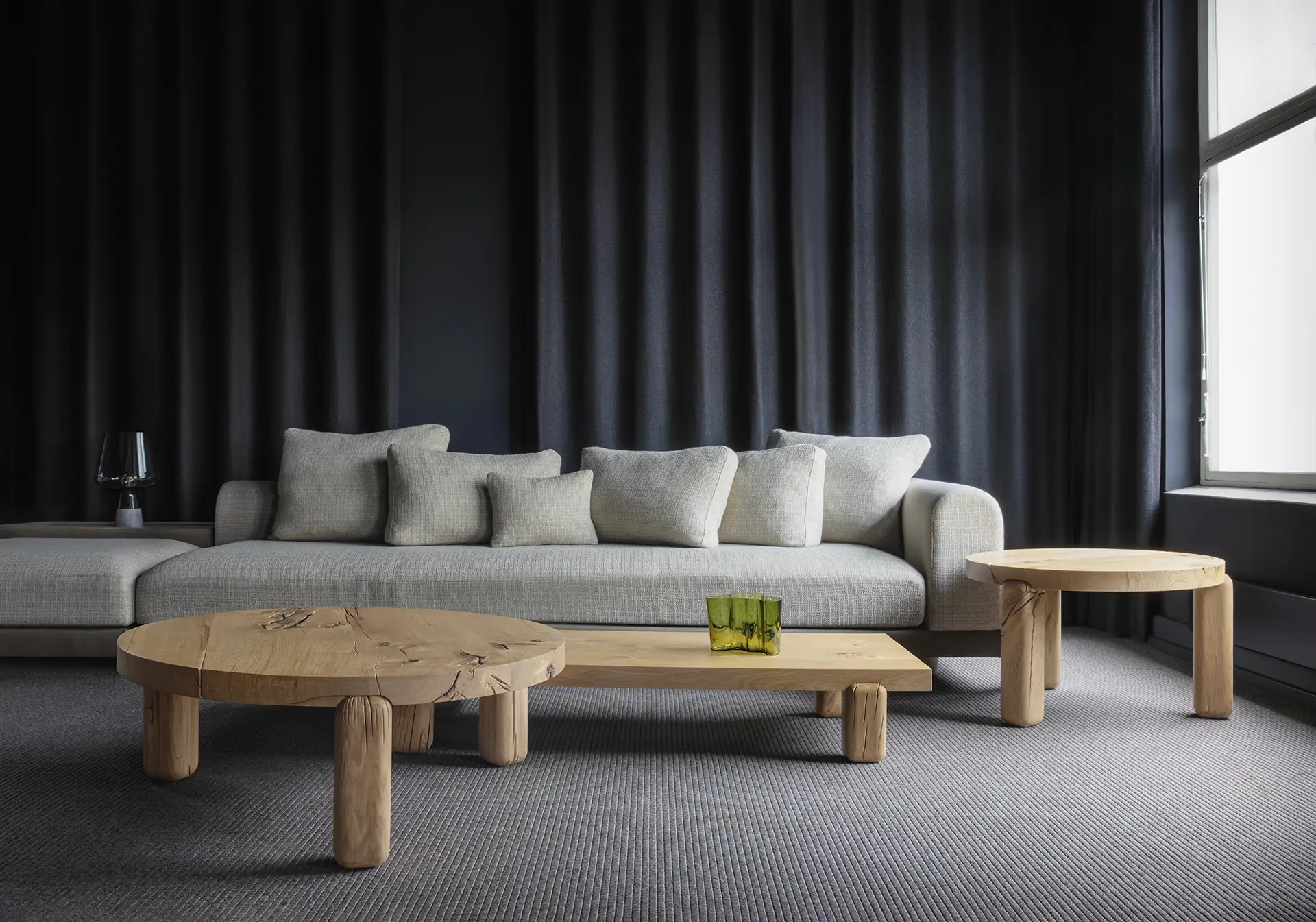
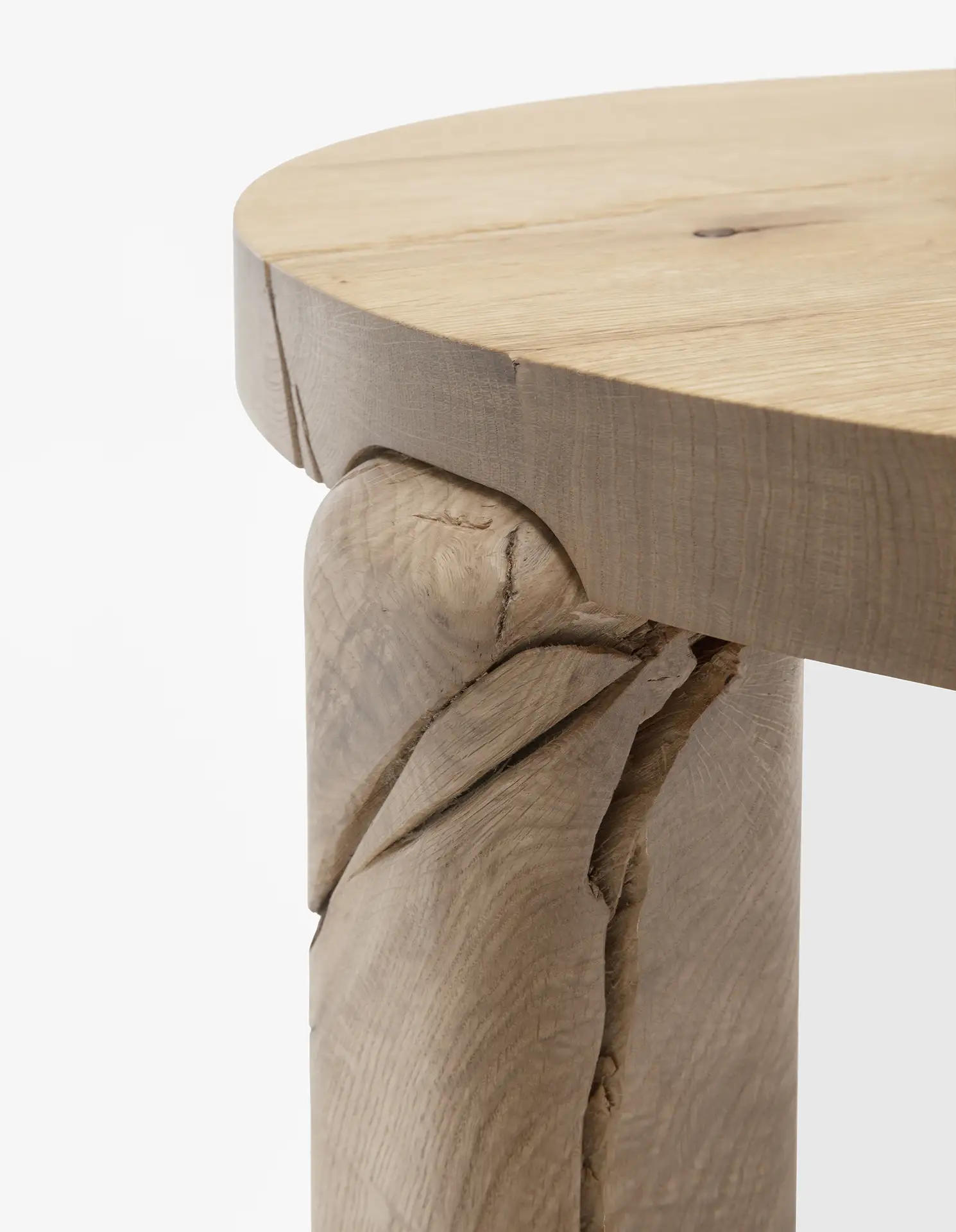
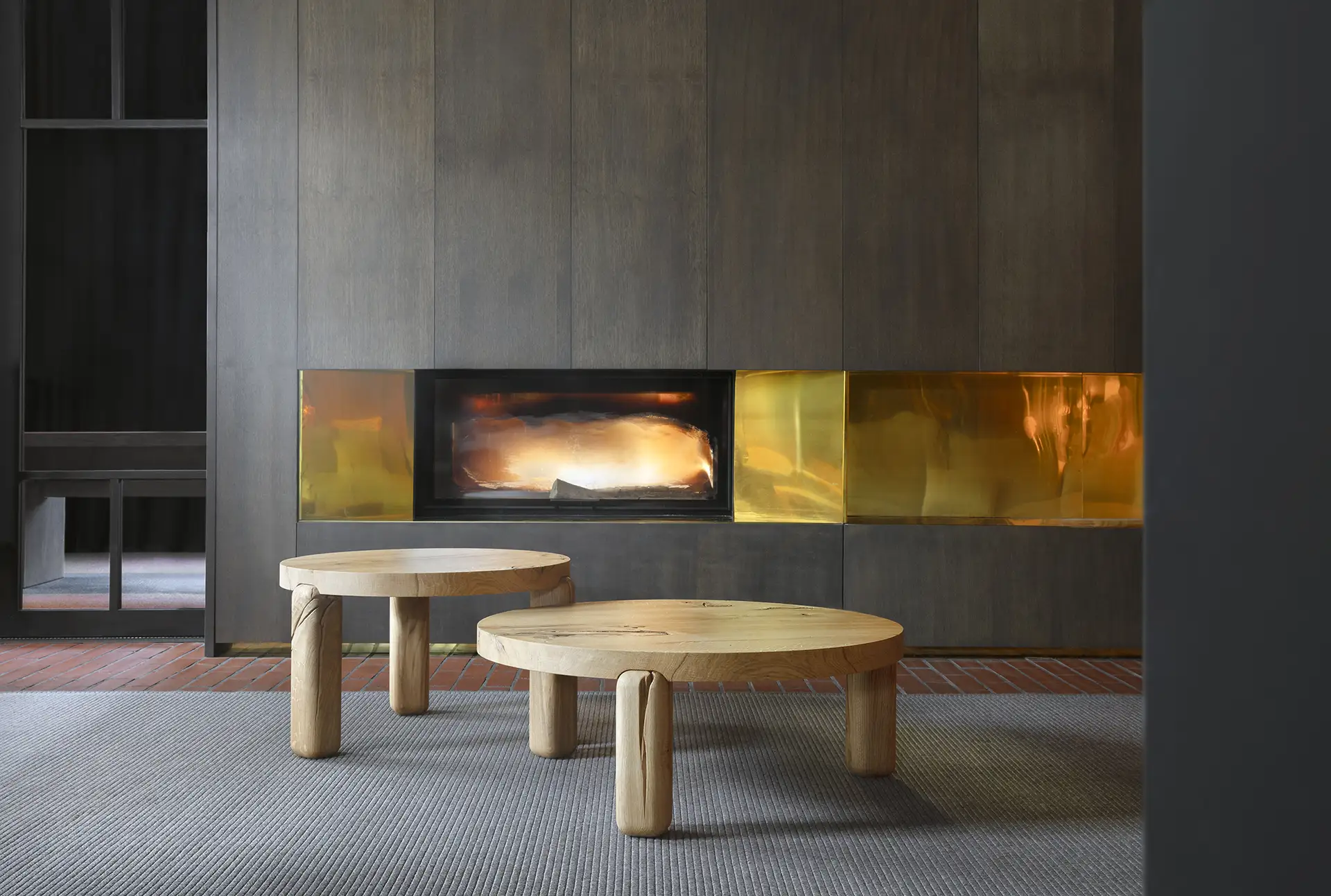
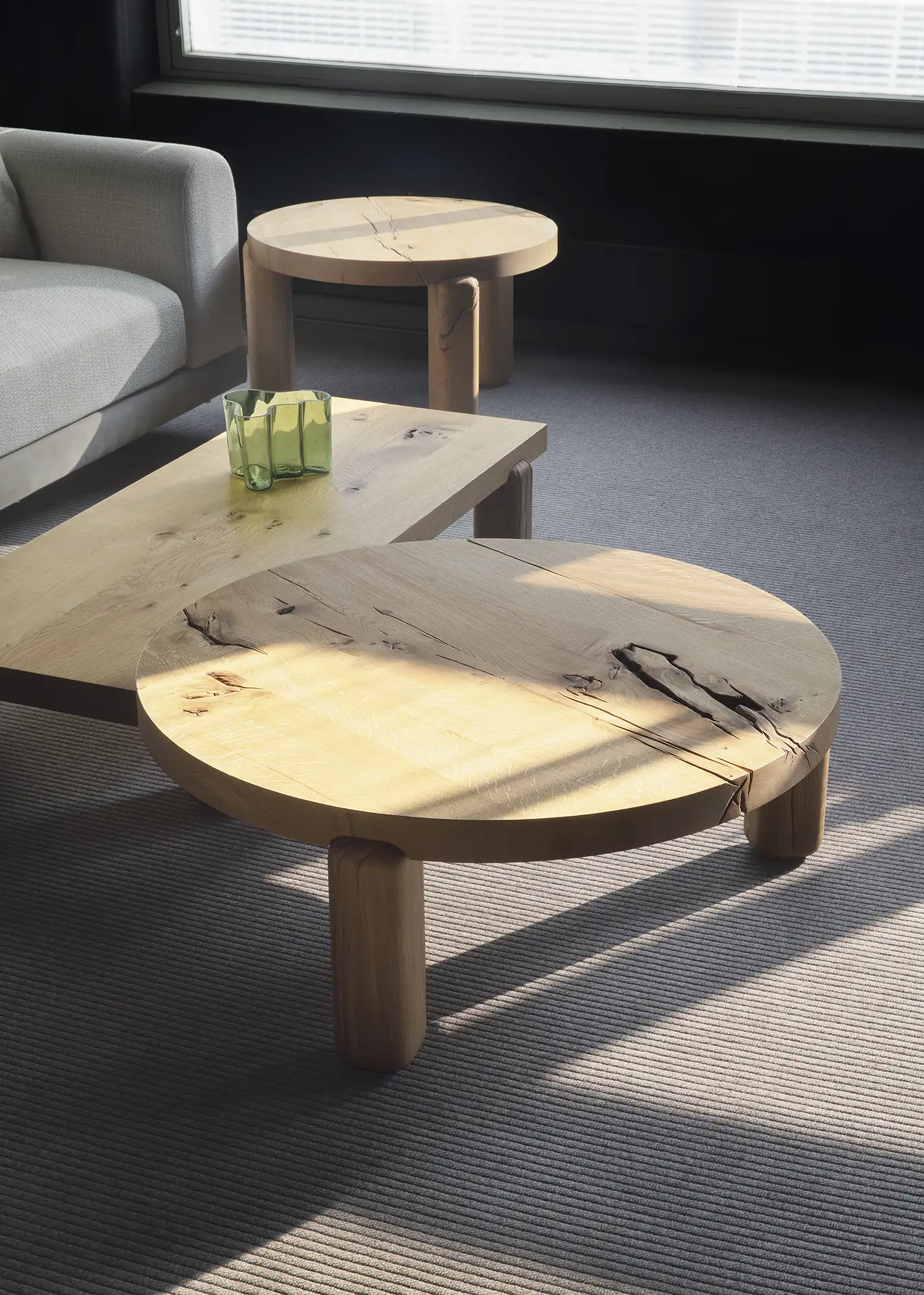
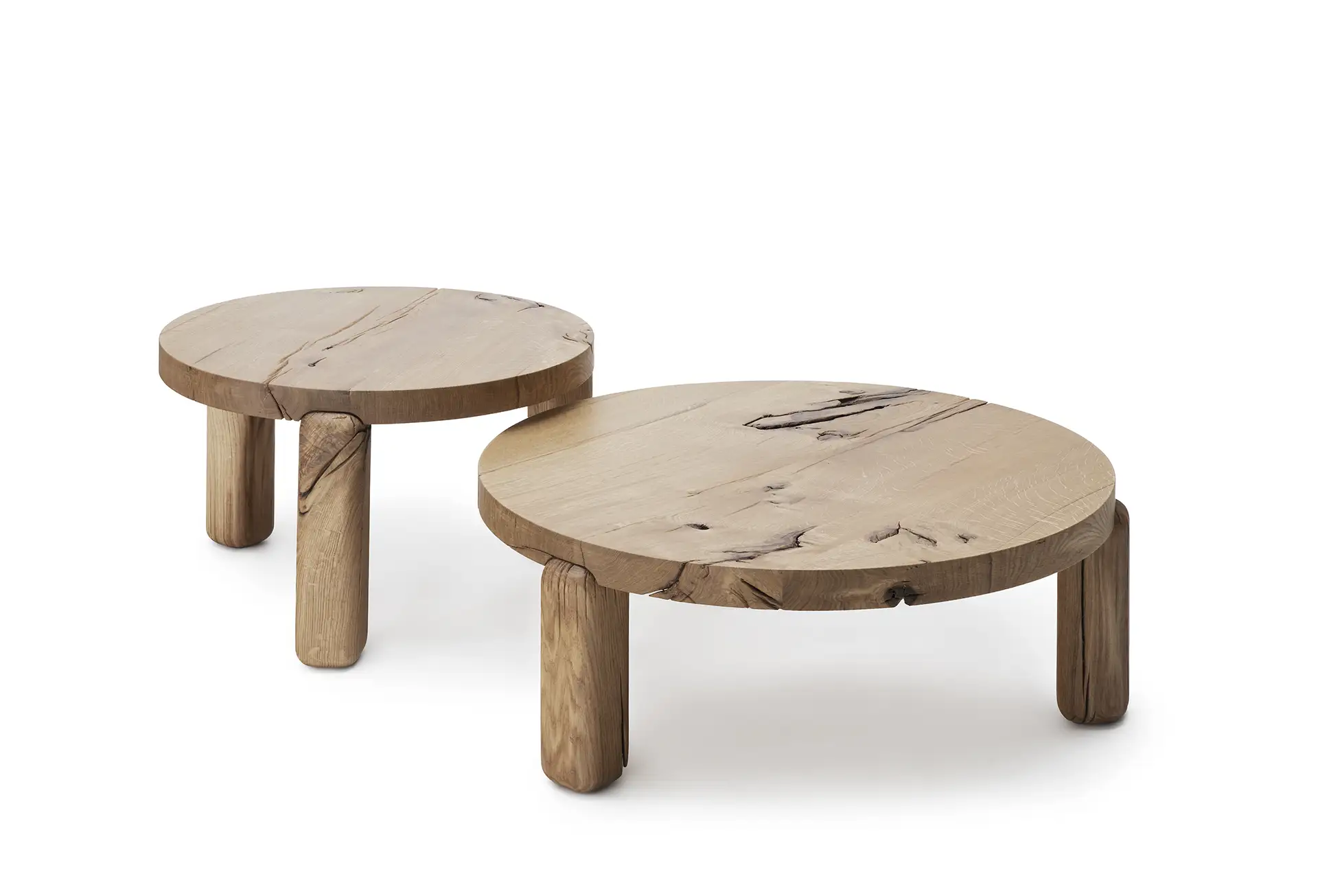
Vuorio immediately fell in love with the idea. The result was the Centenniale coffee table (2023), which puts wood – with all its cracks, knots and grain patterns, traces carved by insects and other irregularities – at the centre. A table where imperfection is perfection.
This year, the table has been joined by two round models in different sizes – each one completely unique.
The Material Shapes the Form
Nikari’s Creative Director Jenni Roininen soon joined the project. Laajisto and Roininen talked extensively about the material and its dimensions. It was important to Laajisto to know what sizes of wood pieces would be available.
“Form follows resources,” Laajisto says. “Respecting and understanding the material also means understanding the dimensions in which it comes. As a designer, I love parameters – having a framework to work within. For me, it gives the product more meaning when laws beyond my control have shaped the final result.”
The legs of the Centenniale are made from offcuts left over from the Biennale stool, designed by Kari Virtanen. Laajisto loves the idea that, in the past, everything was made in this way: from whatever materials happened to be available at the time. In her own practice, she strives to create as little waste as possible and to design according to the material at hand.
Laajisto feels that, alongside their respect for materials, she and Nikari also share a set of values: the idea that growth does not have to mean increasing volume. You can grow through quality, strive to do things as well as possible and remain true to your roots. Founded in Ostrobothnia, Nikari later found its home in Fiskars, and all of its products continue to be made in Finland, honouring longstanding woodworking traditions.
“All the accumulated knowledge passed down from Kari Virtanen is incredibly important.”
“Without grand gestures or fanfare, Nikari has managed to establish itself as an international player in the high-quality furniture market by focusing on what they do best: practical, comfortable and beautiful solid-wood furniture made in Finland.” — Wesley Walters
A Long-Awaited Collaboration
The collaboration between Kaksikko – Salla Luhtasela and Wesley Walters – and Nikari has been a long-standing one, dating all the way back to the beginnings of Kaksikko.
“When Salla and I started working together in 2014, we set ourselves the goal of collaborating with Nikari,” Walters says.
Nikari had already made a strong impression on him during his student years: the way a small local company had managed to become international without making compromises.
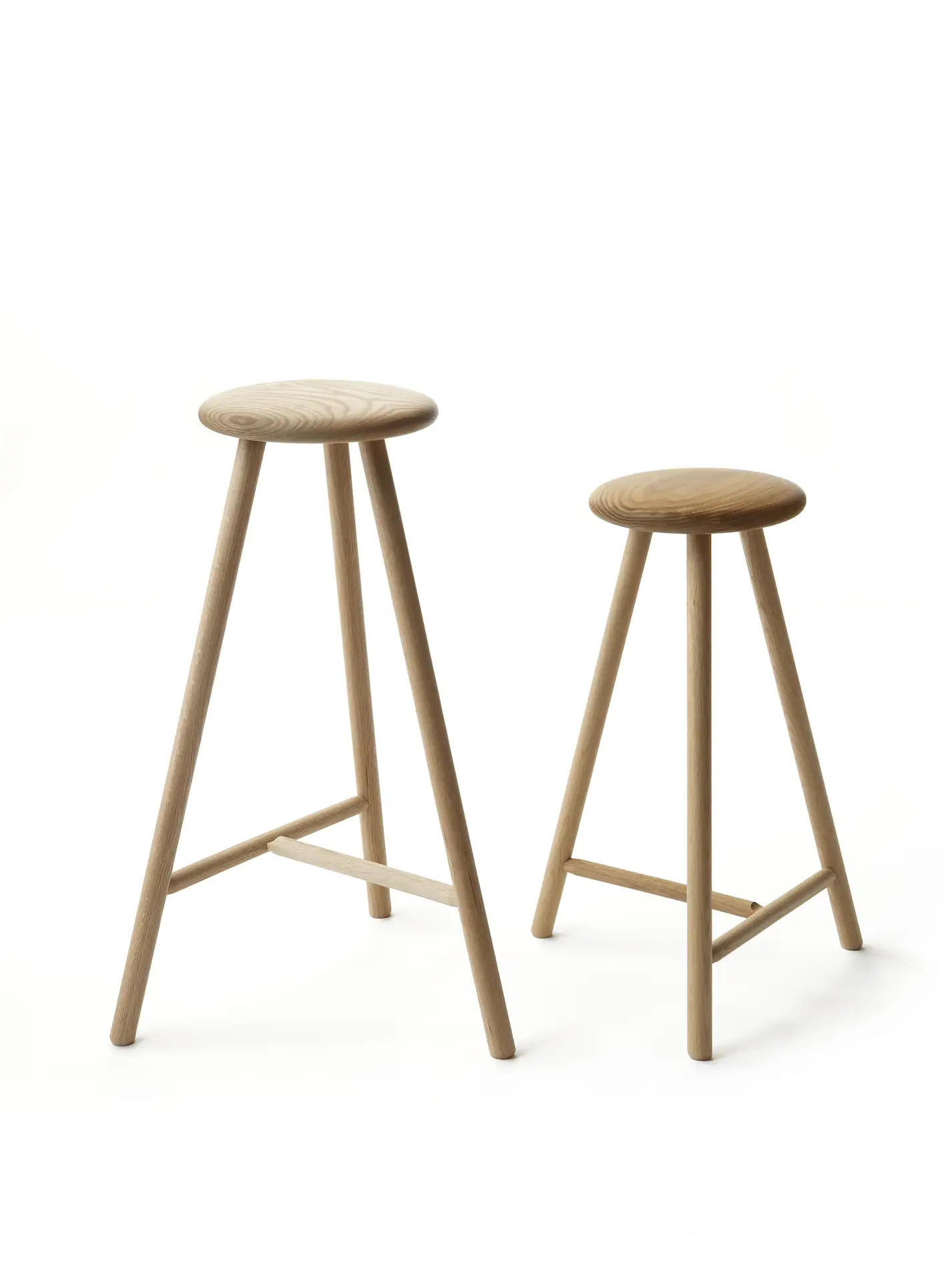
In 2015, Kaksikko won the Finnish Design Shop Award with the Perch stool, and FDS CEO Teemu Kiiski asked the designers which companies they would like to approach about manufacturing it. Nikari was their immediate answer.
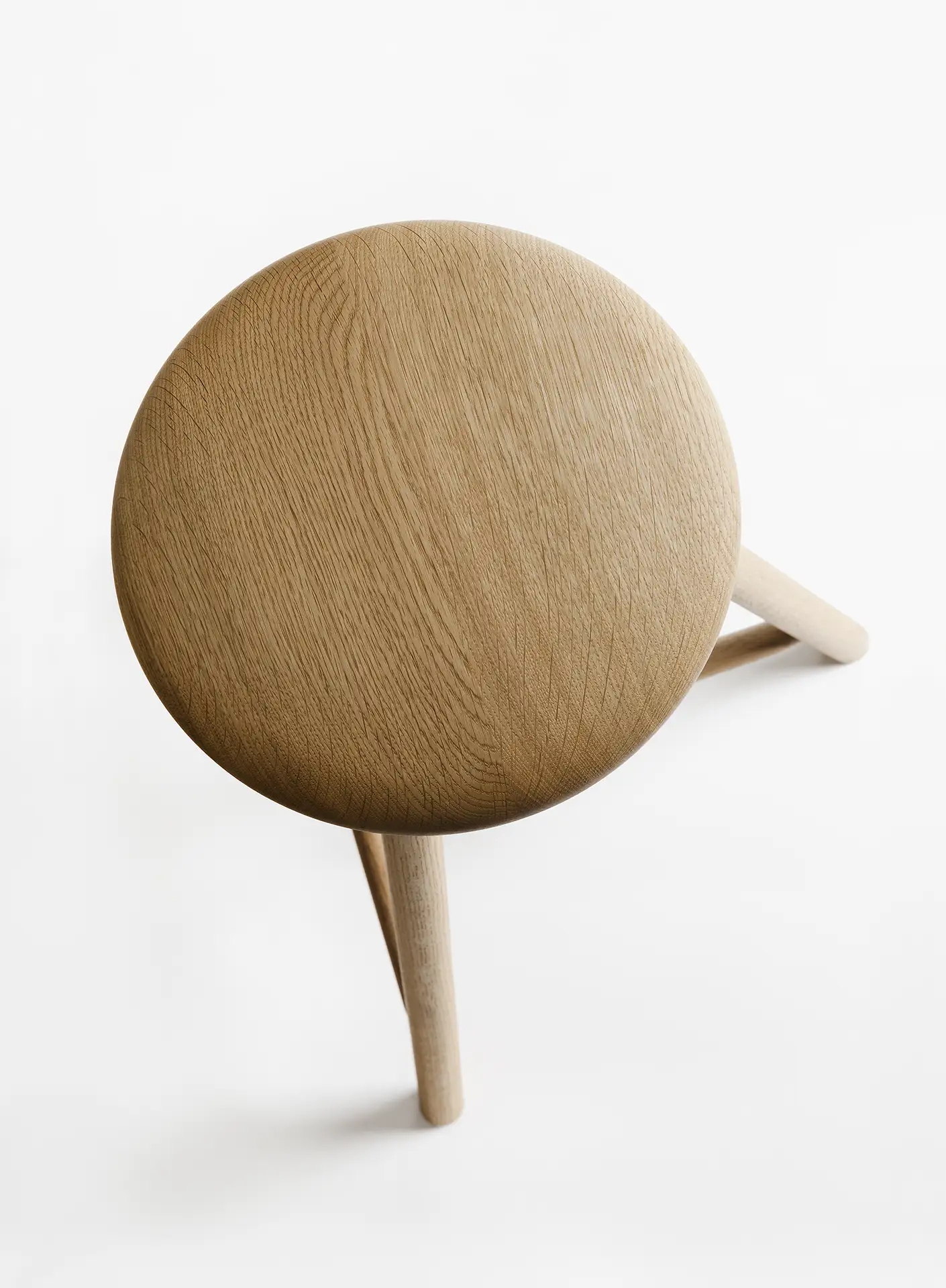
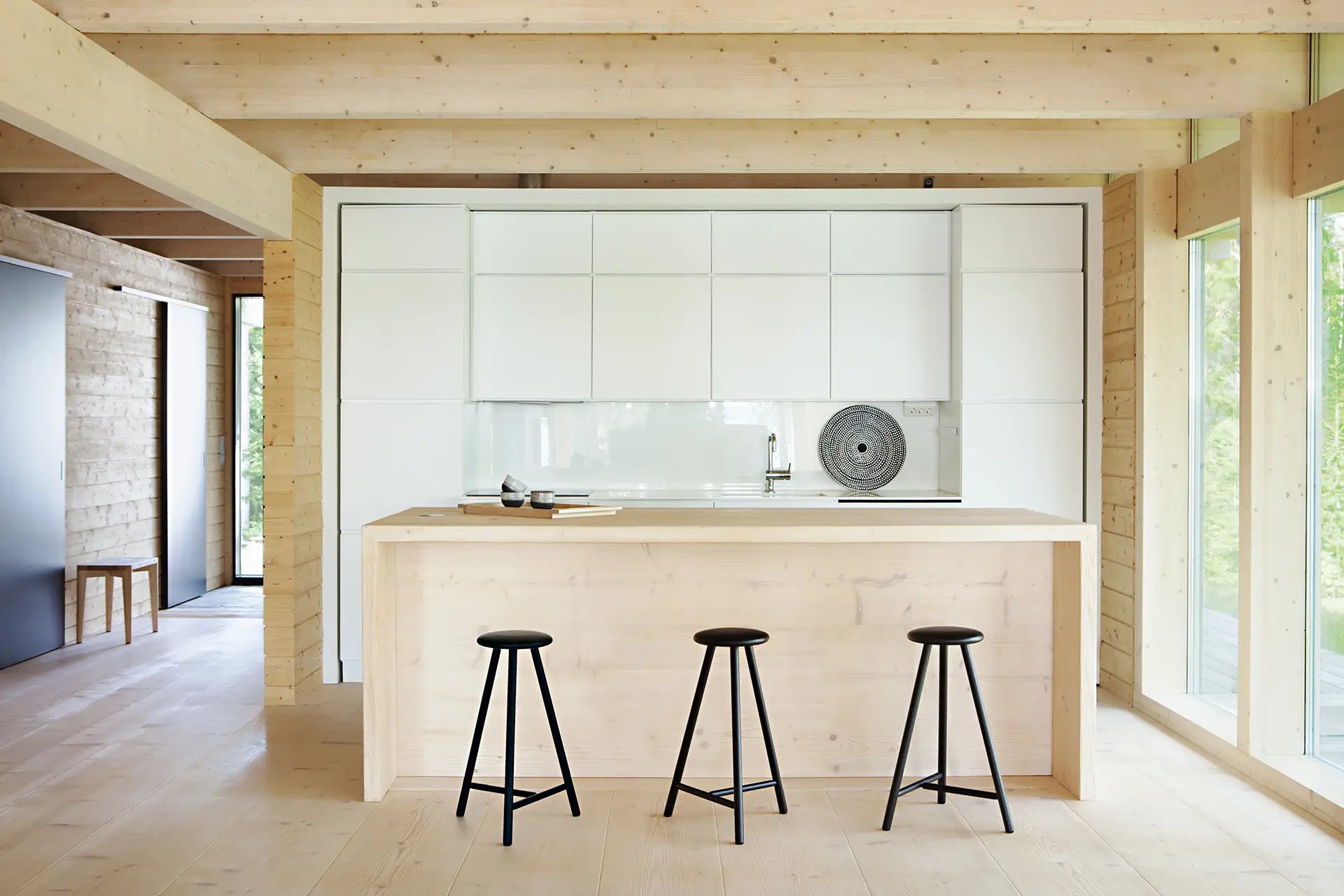
The solid-wood Perch, with its understated beauty, was a perfect fit for Nikari’s collection. Since then, the collaboration has continued, and over the past decade the Kaksikko designers have worked closely on various projects with Johanna Vuorio, Jenni Roininen and Nikari’s cabinetmakers.
“The collaboration has been encouraging and inspiring. It has been an honour to be part of their story as the company has grown and gained international recognition.”
Respect for Making by Hand
The Kaksikko designers say that the most important aspect of the collaboration has been the fact that, thanks to Nikari’s expertise in wood, every design they have developed together has reached the market better than the original design.
“As all designers know, that certainly doesn’t always happen!”
Nikari’s deep understanding of wood as a material, its ability to make prototypes and its practice of manufacturing products in-house have allowed Kaksikko to take part in problem-solving at many stages of the process.
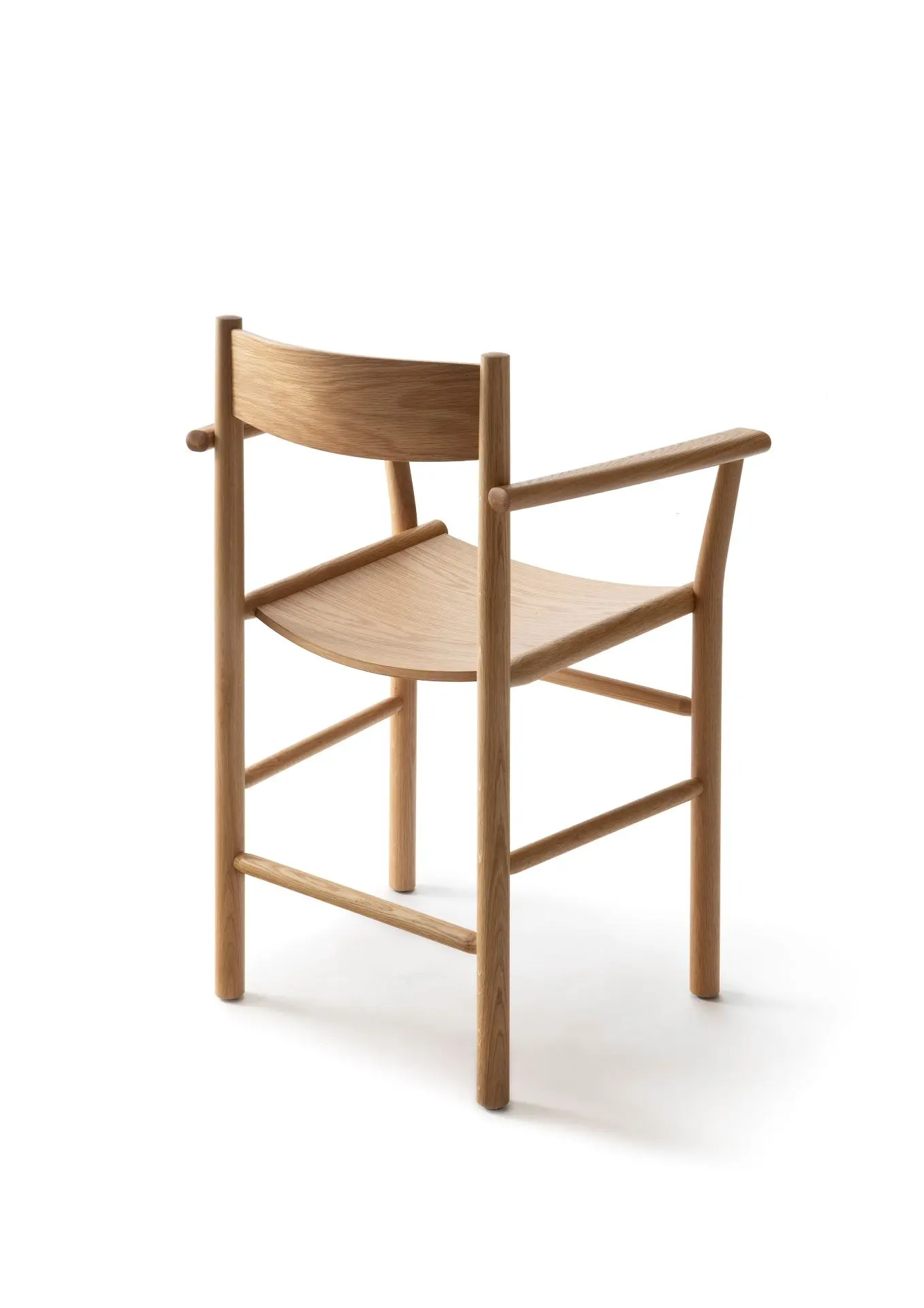
“For example, when I was working on the Akademia chair, I was able to turn the legs and dowels myself in the workshop and help one of the cabinetmakers assemble and glue the first prototypes,” Walters says.
As designers, Luhtasela and Walters say they love the process of making and creating prototypes at a 1:1 scale. The opportunity to take part in the actual manufacturing process is therefore incredibly rare and special.
Staying True to Your Values
The Kaksikko designers value not only Nikari’s love and respect for wood, but also the way the company invests in Finnish craft traditions and wants to preserve and develop them – and to keep things local.
They say they have learned, on both a strategic and ethical level, how staying true to your roots and values can be beneficial in every sense.
“Rather than simply following the whims of the market and trying to grow as quickly as possible, persistently focusing on what you do best can pay off in the long run.”
It was precisely Nikari’s approach to internationalisation that made such an impression on Walters during his student years. And it is something he still admires today:
“Without grand gestures or fanfare, Nikari has managed to establish itself as an international player in the high-quality furniture market by focusing on what they do best: practical, comfortable and beautiful solid-wood furniture made in Finland.”